If you’ve ever walked into a beautifully finished home and felt that something was different — more polished, more custom, more intentional — there’s a good chance interior trim was doing a lot of that work.
Trim is the finishing layer of any interior. It covers transitions, defines spaces, adds architectural detail, and gives a room the kind of character that paint alone can’t deliver. But with so many options available, it can be hard to know where to start.
This guide covers the main types of interior trim we install across Toronto and the GTA — what each one is, what it does for your home, and how to decide which upgrades make the most sense for your space.
Crown Moulding
Crown moulding is the decorative trim that runs along the junction between your walls and ceiling. It’s one of the most requested finish carpentry upgrades in the GTA — and for good reason.
What it does: Crown moulding creates a visual transition between two surfaces that would otherwise meet at a hard, unfinished angle. It adds height to a room, covers minor ceiling imperfections, and gives any space a more refined, complete look. It’s the kind of detail that buyers notice at resale.
Is it right for your home? Crown moulding works in virtually any room — living rooms, dining rooms, bedrooms, hallways, and kitchens. It suits both traditional and contemporary interiors depending on the profile you choose. Simpler flat profiles work well in modern spaces; more detailed curved profiles complement traditional or classic interiors.
What to know before you start: Profile size matters. A large, ornate crown in a low-ceilinged room can feel overwhelming. A small, flat profile in a grand formal dining room can look underwhelming. Getting the proportions right is one of the most important parts of the job — and something we assess on-site during every estimate.
Wainscoting
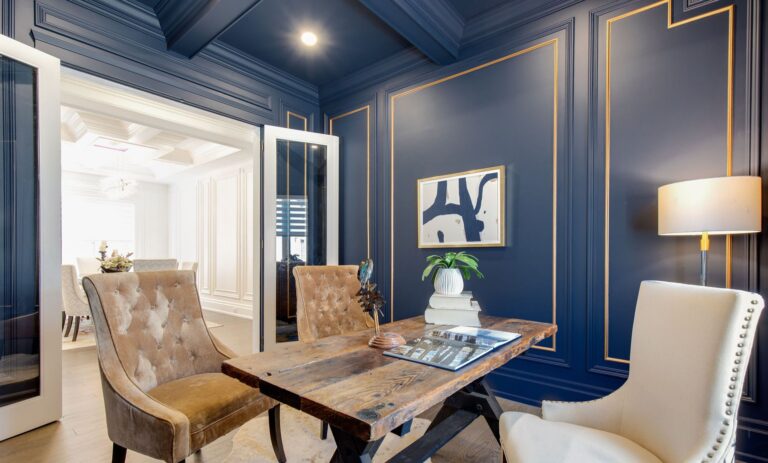
Wainscoting is a wall treatment that covers the lower portion — or the full height — of your walls with panels, mouldings, or a combination of both. It’s one of the most transformative upgrades you can make to an interior space.
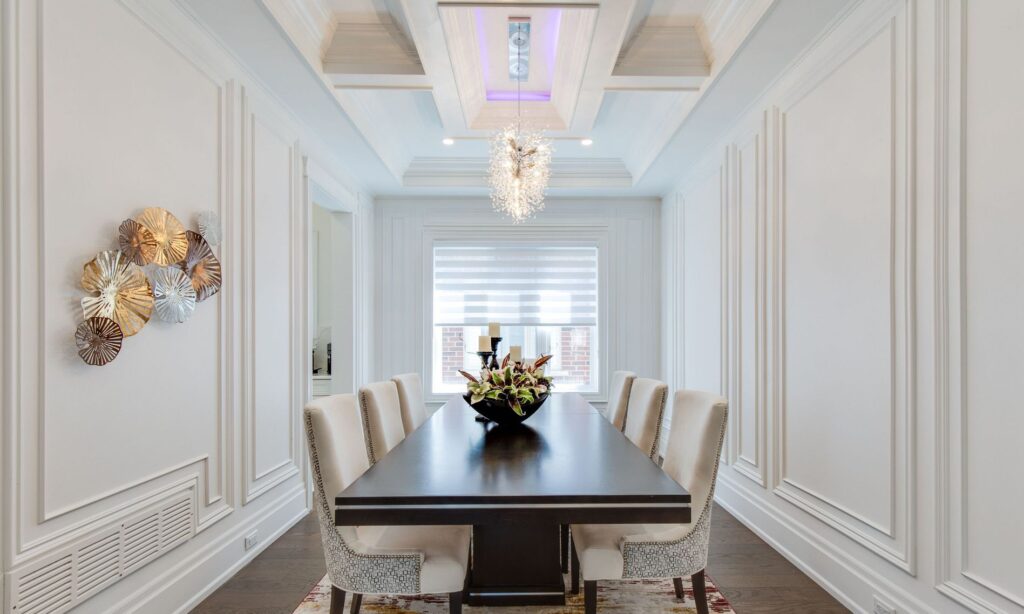
What it does: Wainscoting adds depth, texture, and architectural character to walls that would otherwise be flat and plain. It works equally well as a subtle half-wall accent or a dramatic floor-to-ceiling statement. It also protects your walls from scuffs and wear in high-traffic areas like hallways and dining rooms.
The two main styles:
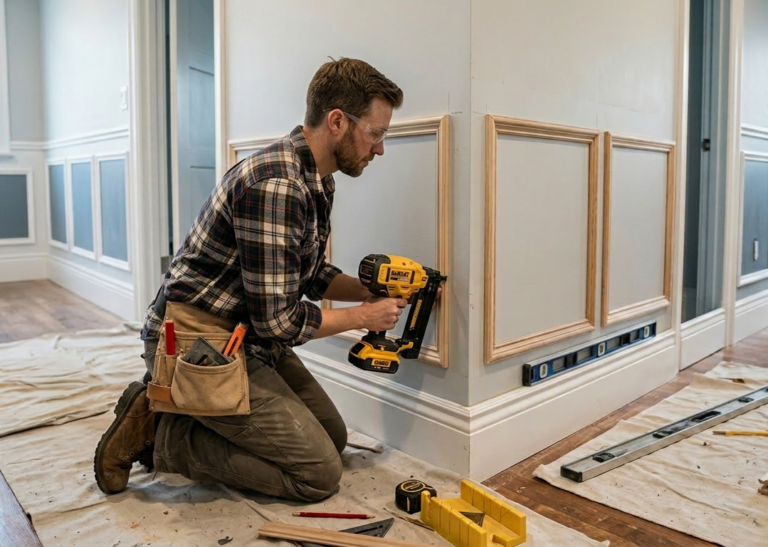
Picture frame wainscoting applies moulding profiles directly onto your existing drywall to create rectangular frames. The moulding projects off the wall surface, adding texture and dimension. It’s the faster, more affordable option and works beautifully in both modern and traditional homes.
Recessed panel wainscoting builds outward from the wall using layered MDF strips and inset mouldings, creating real physical depth. It looks and feels like custom millwork — closer to built-in cabinetry than applied trim. It takes roughly three times longer to install than picture frame and costs more, but the visual impact is significantly stronger.
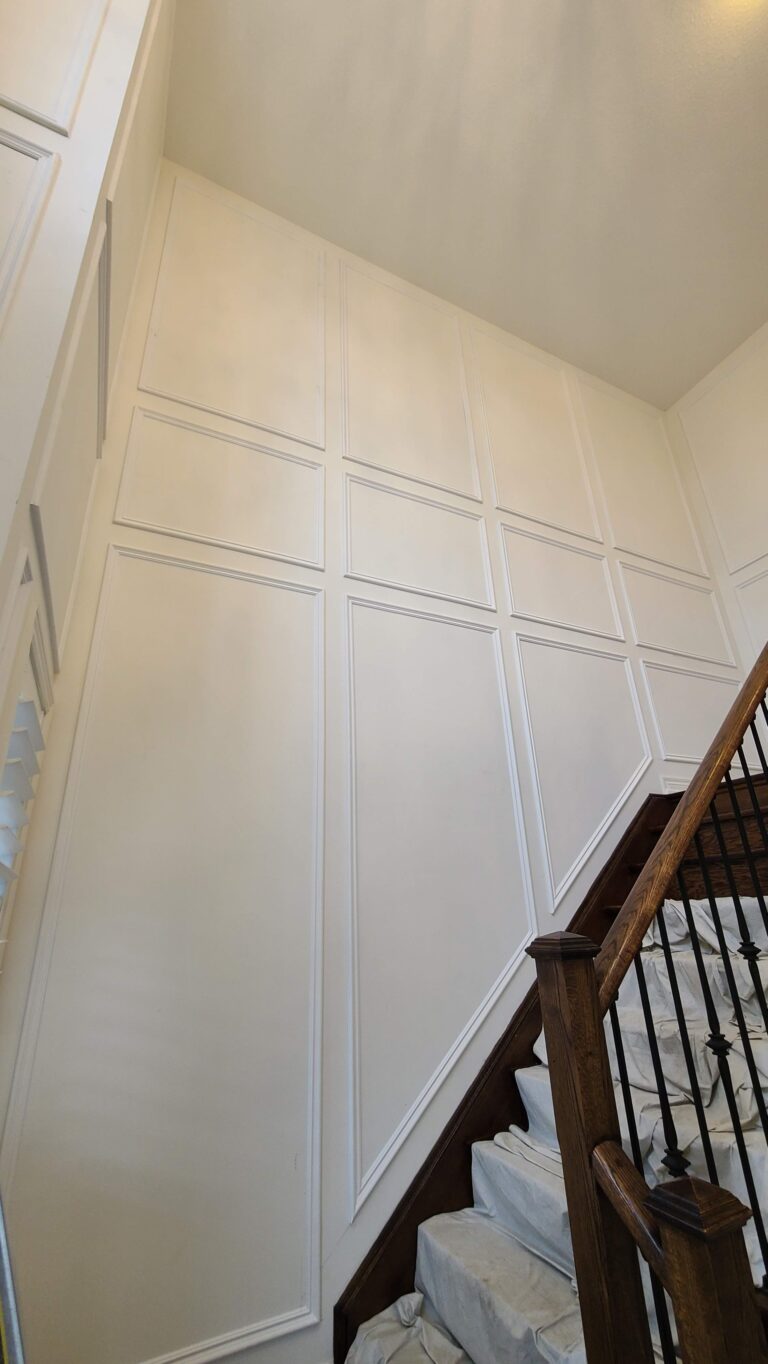
Is it right for your home? Wainscoting suits almost any room. Dining rooms, living rooms, hallways, entryways, and staircases are the most popular choices across Vaughan, Markham, and Mississauga. If you want to make a room feel more custom and intentional, wainscoting is one of the highest-impact options available.
Baseboards and Casings
Baseboards and casings are the foundational trim elements of any finished interior. They’re often the last thing homeowners think about — and one of the first things people notice when they’re missing or poorly done.
What they do:
Baseboards run along the bottom of your walls where they meet the floor. They cover the gap between drywall and flooring, protect your walls from kicks and vacuums, and give every room a clean, finished edge.
Casings are the trim that frames your door and window openings. They cover the gap between the frame and the drywall and tie the opening visually into the rest of the room’s trim design.
Together, baseboards and casings create the trim “system” of your home. When they’re proportioned and styled consistently throughout — matching profiles, consistent heights, clean corners — they make a home feel cohesive and well-built. When they don’t match or are poorly installed, that inconsistency is surprisingly easy to notice.
Is it right for your home? If your baseboards are damaged, outdated, or inconsistent, replacing them is one of the most cost-effective upgrades you can make. New baseboards and casings throughout a home make a significant difference in how finished and polished every room feels — particularly in homes across Richmond Hill, Oakville, and Burlington where renovations are common.
Waffle Ceilings
A waffle ceiling is a grid pattern of decorative beams applied to the ceiling surface, creating a coffered or “waffle” effect that adds dramatic architectural depth to any room.
What it does: A waffle ceiling transforms a plain flat ceiling into one of the most striking architectural features in the home. The grid of beams creates depth, shadow lines, and visual texture that no other ceiling treatment can replicate. It also makes ceiling height feel greater — the vertical lines of the beams draw the eye upward.
How it’s built: We construct each beam using MDF and crown moulding sized to your chosen beam dimensions. All cutting is done outside your home. The room is fully protected with drop cloths, and furniture is moved before work begins. After installation, all joints are sanded, nail holes filled, and edges caulked — leaving the ceiling ready for primer and paint.
Is it right for your home? Waffle ceilings work best in rooms with standard 8-foot ceilings or higher. Living rooms, dining rooms, and home offices are the most popular choices. It’s a statement upgrade — not every room needs one, but in the right space, it becomes the focal point of the entire home. Popular among homeowners in Aurora, Brampton, and Hamilton.
How to Choose What’s Right for Your Home
Every home is different, and the right trim upgrades depend on your space, your style, and your goals. Here are a few questions to guide your thinking:
What’s your budget? Baseboards and crown moulding are the most accessible entry points. Wainscoting and waffle ceilings are larger investments that deliver proportionally larger visual impact.
What’s the style of your home? Traditional homes with higher ceilings tend to suit more detailed, multi-piece profiles. Modern or contemporary homes often look better with cleaner, simpler lines.
What room are you starting with? The most impactful rooms for trim upgrades are typically the ones guests see first — entryways, hallways, living rooms, and dining rooms.
Are you planning to sell? Crown moulding, wainscoting, and upgraded baseboards consistently come up as high-ROI renovations that buyers notice and value.
Do the upgrades need to work together? If you’re doing multiple types of trim in the same home, the profiles and proportions need to relate to each other visually. This is something we plan during the estimate so the result feels like one cohesive design rather than a collection of separate projects.
The Right Installation Order
If you’re planning multiple trim upgrades, the order of installation matters. We’ve written a dedicated guide on this topic — read about the correct sequence for finish carpentry installations here.
Ready to Get Started?
We install all of these trim types across Toronto and 14 GTA cities including Mississauga, Vaughan, Newmarket, Milton, Markham, and more. Every estimate is free — we come to your home, assess the space, discuss your options, and give you a detailed written quote before any work begins.
Home Trim — Expert Finish Carpentry Toronto & GTA Call (647) 302-1020 for a free in-home consultation.